[I put all movies and images on one page, so it may take a while to load depending on your connection speed. Movies also require HTML 5--which I think most newer devices support.]
On July 5, 2018 I left my apartment in Udom Suk on the outskirts of Bangkok with my trusty Brompton folding bike, two bags that attach to it, and one small backpack. I'd finally realized that going "multi-modal" (put the bike on the bus or train, then use it to ride around different towns), was what made the most sense. Some guys insist on putting in all the miles on the bike. While that made sense last January, riding down the coast in the cool season on wide, often empty roads; now in the rainy season, what I really wanted to do was explore some parts of Thailand north of Bangkok, and I didn't care about proving how I could tough it out on the long stretches of highway between major towns in Isaan and beyond in the rain.
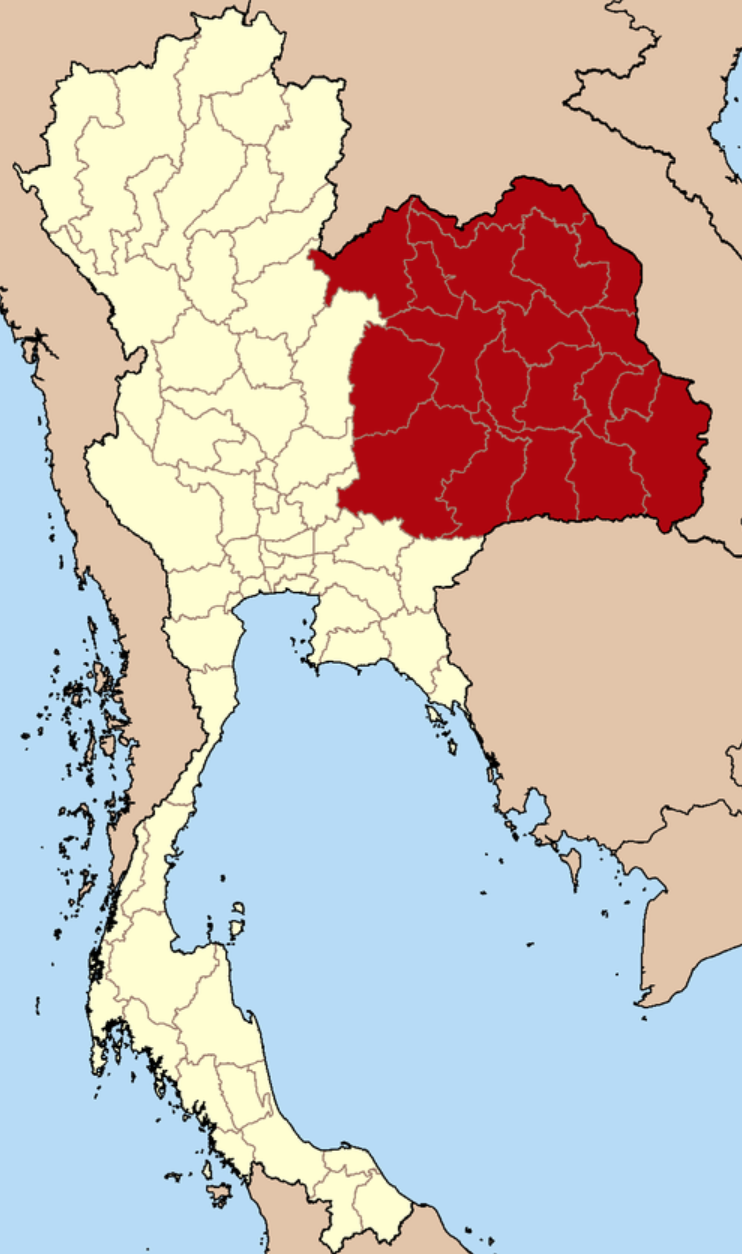
Isaan (rural Northeast Thailand).
(Rendered in English also as Isan, Esarn, etc.)
Isaan, for those who don't know, is the large, rural, poor northeastern part of Thailand, famous for rice paddies and salt-of-the-earth people who speak a language that's closer to Laotian than Thai. Many of the menial workers in Bangkok hail from towns like Korat, Khon Kaen, Udon Thani and others in Isaan. They are often unsophisticated, but friendly.
I got off the Skytrain in Mo Chit, rode about a mile to the bus station and asked somebody where the buses bound for Pak Chong could be found. (Pak Chong is the town closest to the famous Khao Yai National Park—somewhere I'd been meaning to go for years.) I was quickly ushered to one that would depart in about 30 minutes, so had plenty of time to pay for my usual two adjacent seats (so I can keep my bags with me), fold my bike and put it in the hold under the bus.
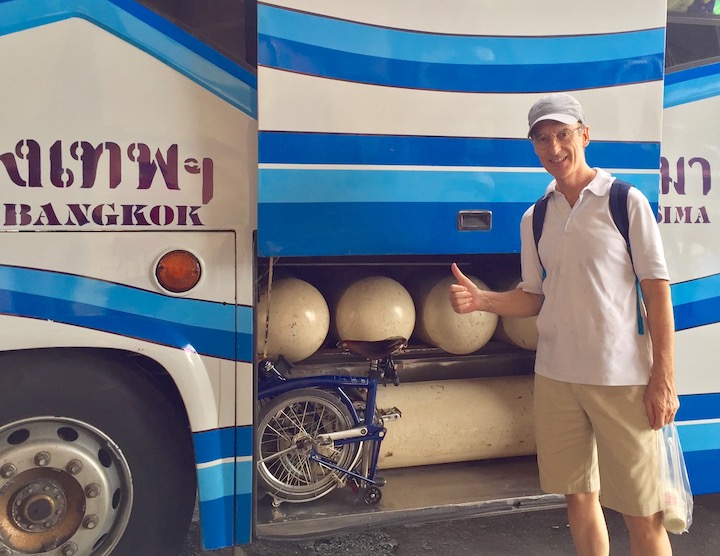
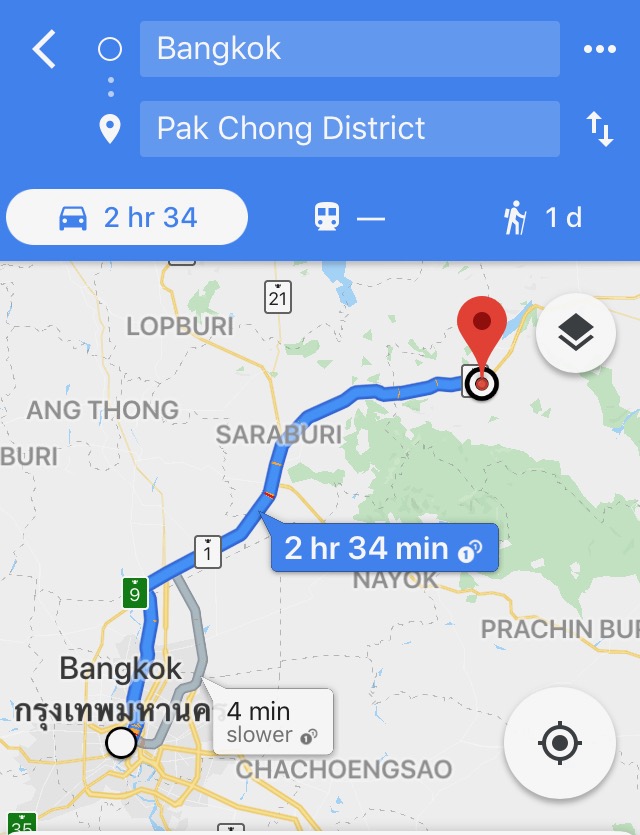
At Mo Chit bus station in Bangkok; Bangkok to Pak Chong (near Khao Yai National Park)
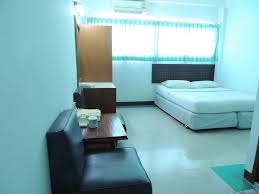
Phubade Hotel in Pak Chong (population 44,000)
I inquired at two lodgings in town; a basic hotel and a hostel. The hostel looked better, but when I asked if there were any barking dogs nearby, she said yes, which nixed it. Since I was eager to get settled, I went back to the first place.
Though it may sound prejudiced, I found it to be a typical Chinese-Thai establishment. Which means: yes, you can spend a night there; but there will be no frills whatsoever. For example, there was an elevator, but it had obviously not been working for years. So, I had to walk up to the fourth floor to inspect the room, then after accepting it, walk back up with my three bags, get settled and walk back down to go find something to eat.
On the bike ride in, I'd noticed an Italian place, so decided to check it out. Their spaghetti bolognese was palatable, but nothing special. At least they agreed to change the music from Bruno Mars to Beatles (or rather, a playlist of people covering Beatles songs). And the waitresses were cute and friendly. The owner (a Thai man, they said), had a big, old American Cadillac parked out front, which was a nice touch. Inside, it looked like he'd acquired some of the furniture from an office liquidation sale, as a few were old desk chairs on wheels.
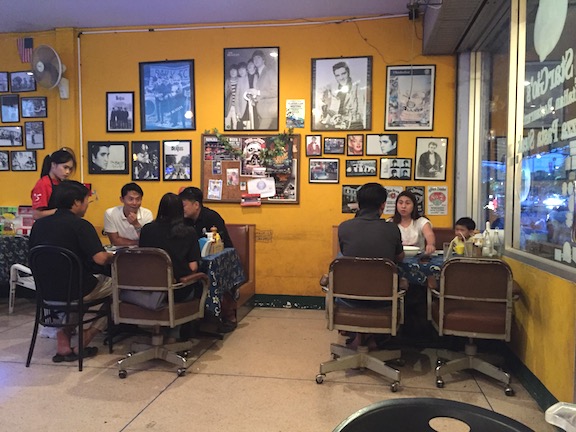
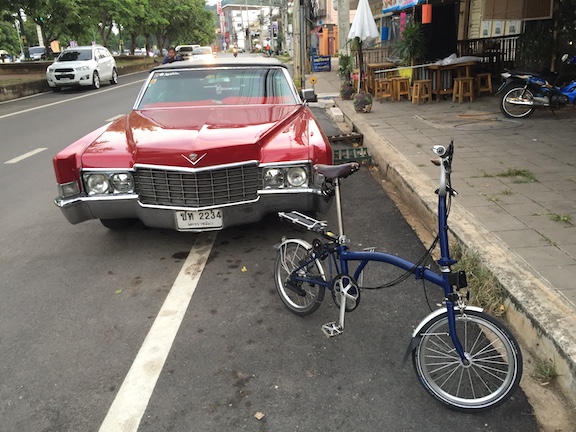
Stargio's Italian Restaurant, Pak Chong
At the Rimtarn Inn in Pak Chong they have a restaurant in back that's right above the Lam Takhong River.
Since it was the rainy season, the river was high.
I thought about spending another night in Pak Chong, but the sink in my room was completely clogged. Rather than trying to unclog it, they tried to move me to a room on the fifth floor. I moved my things there for about an hour, but as it had the world's noisiest air conditioner, I said screw it and took a songtaew (pickup truck with two rows of benches in the back), up closer to Khao Yai park.
A good friend in Bangkok who loves Khao Yai said he always stays at the Jungle House, which is near the entrance to the park. So, I called ahead from Pak Chong and made a reservation there. The songtaew dropped me off right in front of the property, which is like a small village full of various sized accommodations; most of which, now in the low season, were empty. Again, I scrambled to pull my bike out of the pickup/taxi, which was full of stout middle-aged Thai women and their bags of produce from town, then looked up to see three elephants just a few feet away. Two had sedan seats strapped to their backs. Their mahout (man who takes cares of them, often for their entire lives), was feeding them, and now and then selling small bags of sugar cane to tourists who would pull over in their cars with their kids to feed the mammoth creatures.
Unsurprisingly, there was a "lady boy" (transgender woman), behind the counter at reception who gave me my key and told me where my room was. (Many, many restaurants and shops in Bangkok have ladyboys working in them. They seem to excel in the service sector.) Later, she arranged for a local man to drive me through the park the following day.
The drive up Khao Yai ("big mountain"), after paying the park fee. Very thick jungle.
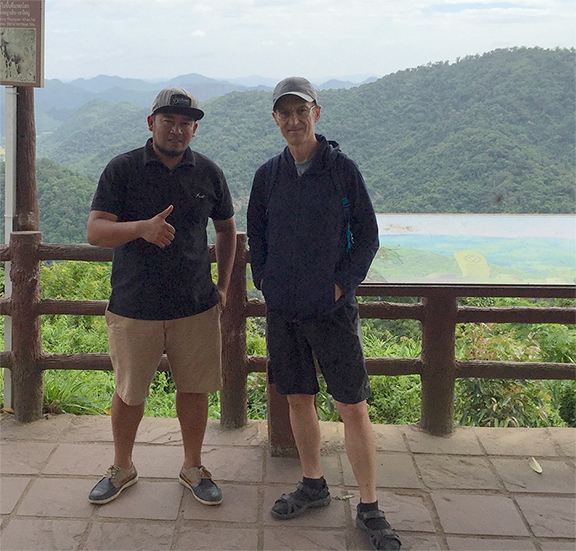
With my driver, Mr. Tom, at first lookout point.
Across the road were some birders with telescopes eyeing a great hornbill high in a distant tree. I could just barely see it.
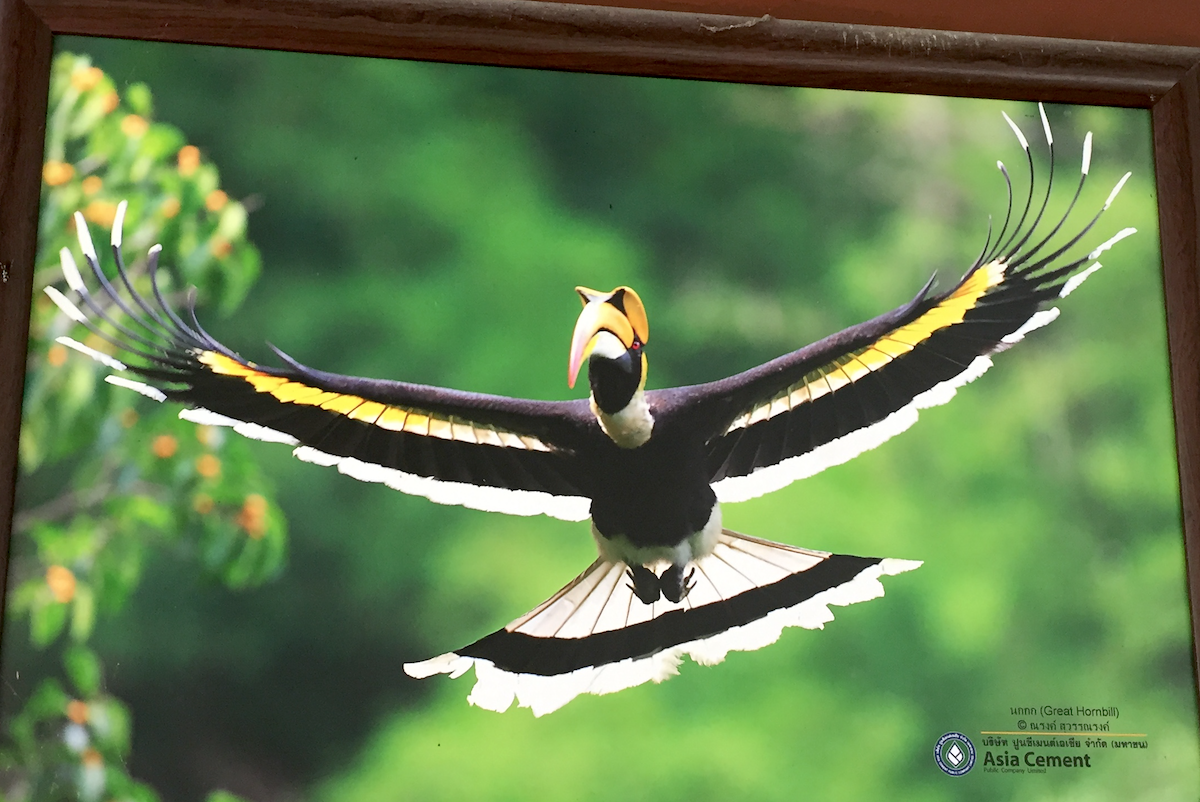
The visitor's center had some photos on the wall of various animals in the park.
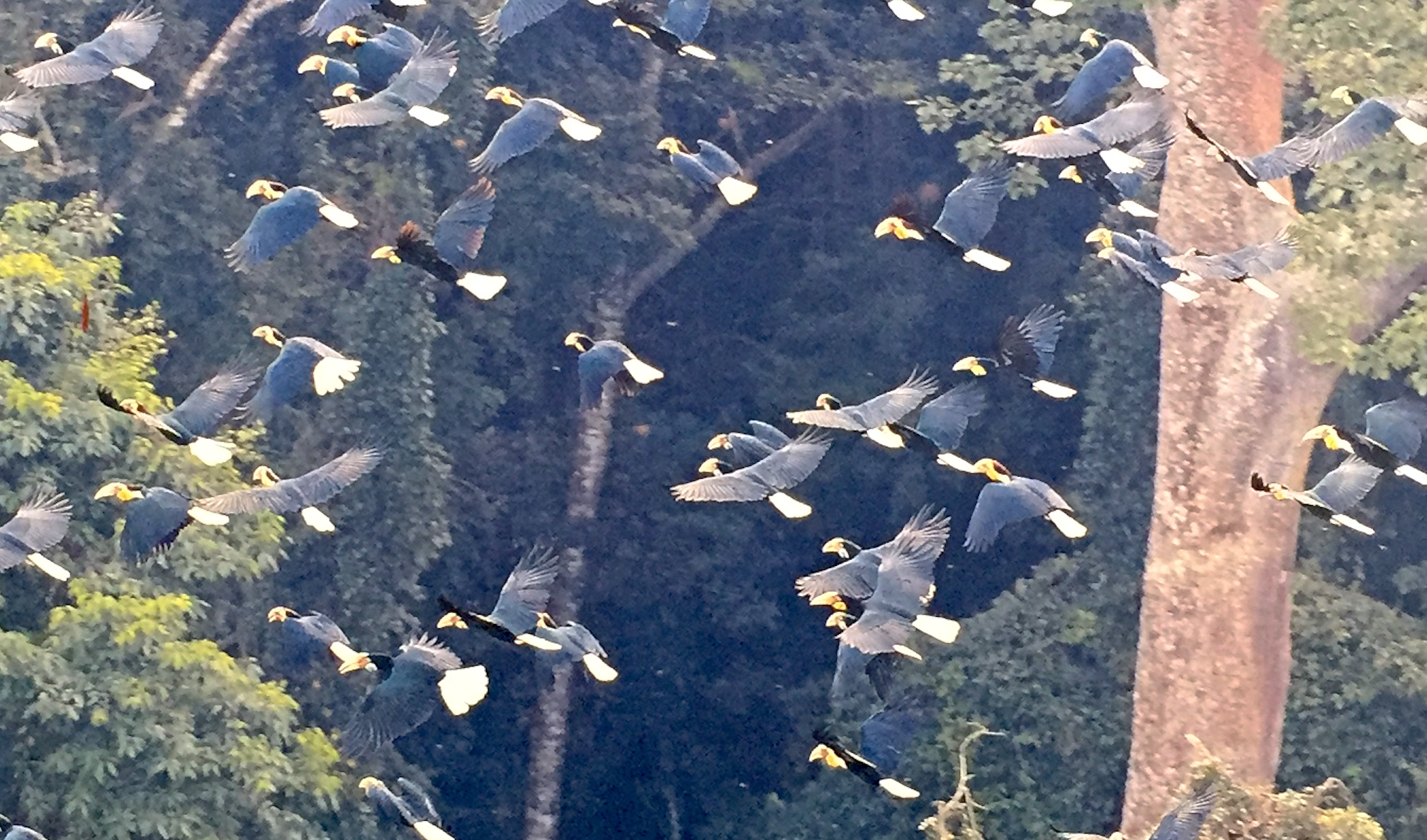
I somehow doubt you can see them in these numbers now, but who knows? Can you imagine??
My driver contacted the visitor's center to arrange a trekking guide for me, which is mandatory. Her name was Ya. She spoke very little English, but with the help of the Thai dictionary in my phone, we got by. After walking in the jungle for a bit, I could see why you needed someone who knew the way...the trail was very narrow and hard to follow at points. Plus, it branched off here and there.
I was also required to buy a pair of "leech socks," which go all the way around your regular socks and to your knees to help keep leeches off. I took them off after the 3km trek, but then walking to the two waterfalls later, I managed to get a leech on each foot! (They're not dangerous, but were an ugly surprise after I got back in the songtaew and discovered them. One had attached itself to my foot right through my sock! It left a small mark for a few days, but was not painful in any way.)
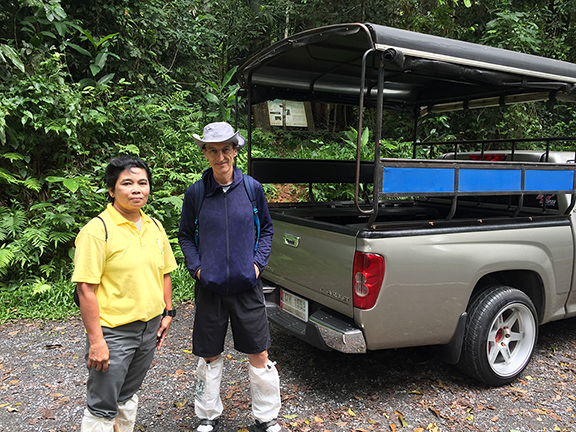
My trekking guide, Ms. Ya, and I standing by Tom's songtaew pickup.
Trekking through the jungle with Ms. Ya
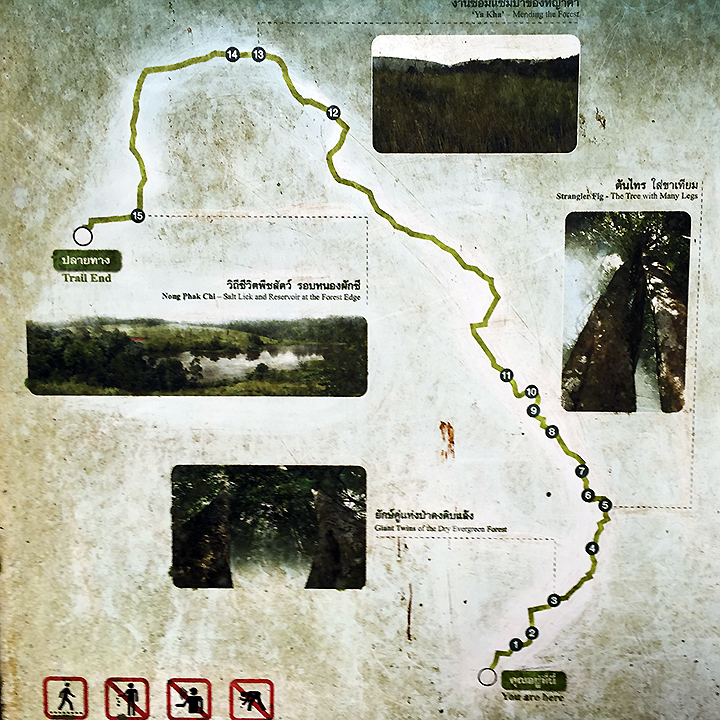
3.3km trek route. Longer treks are also offered. About $15 for the guide, $2 for leech socks.
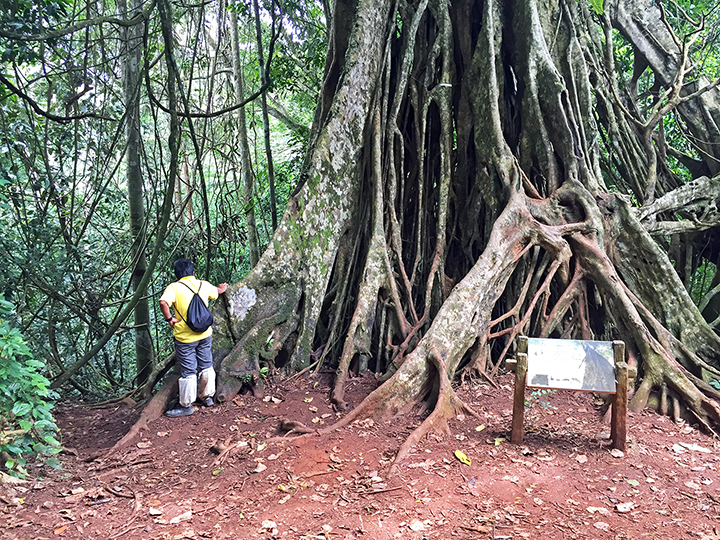
Large banyan tree
I only caught a glimpse of two gibbons high up in the trees...but you could sure hear them!
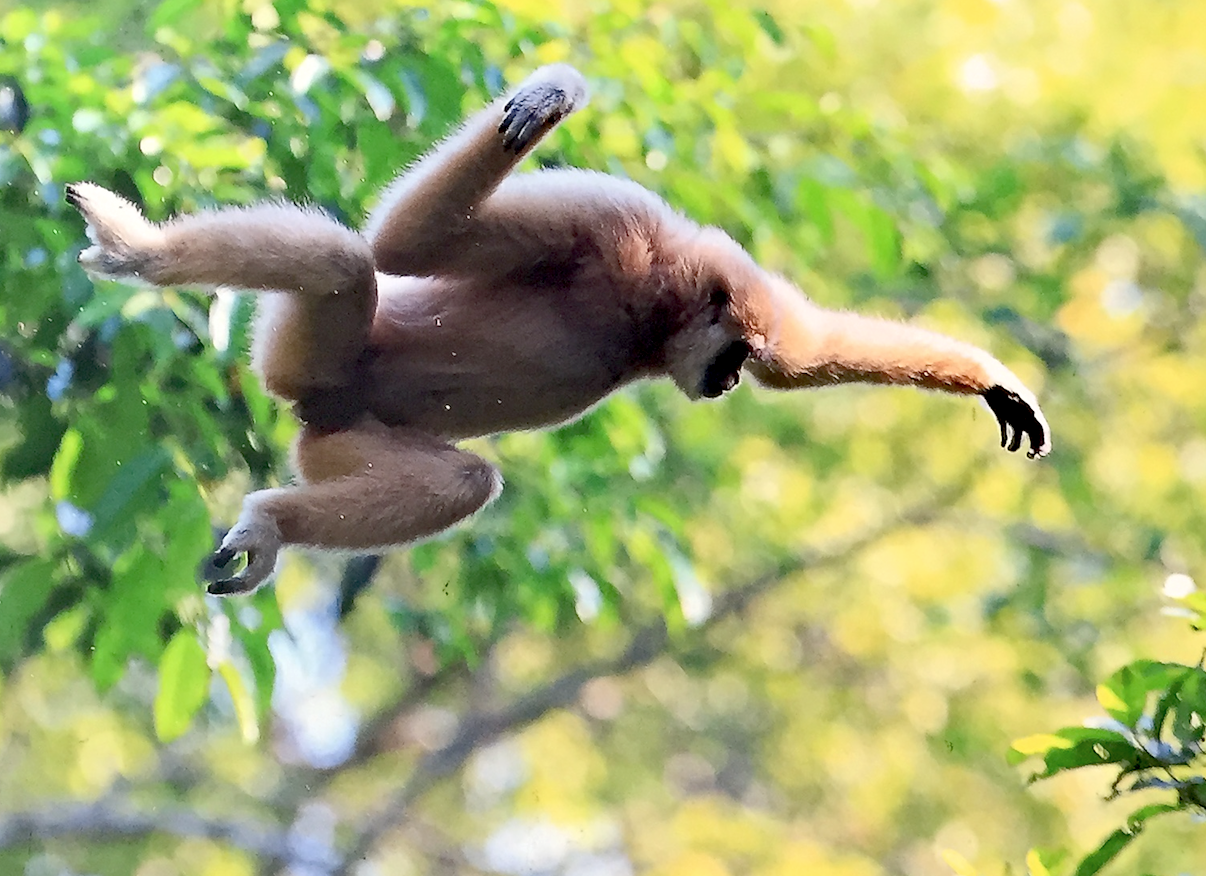
Photo of gibbon in visitor's center
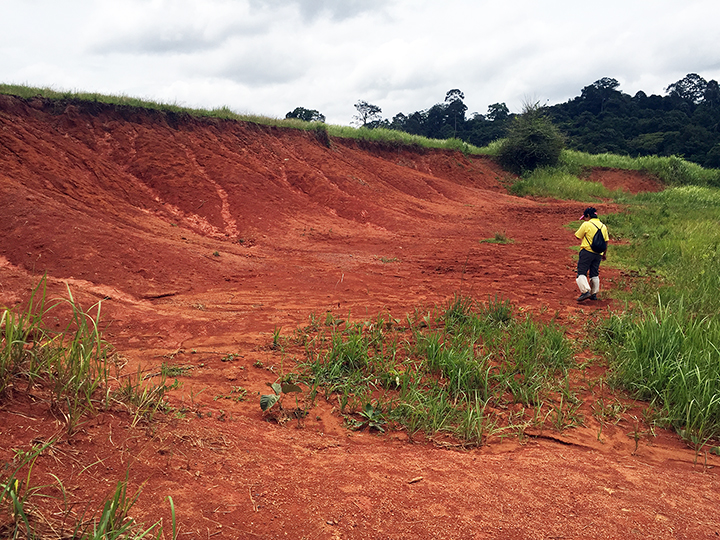
Salt lick that various animals use
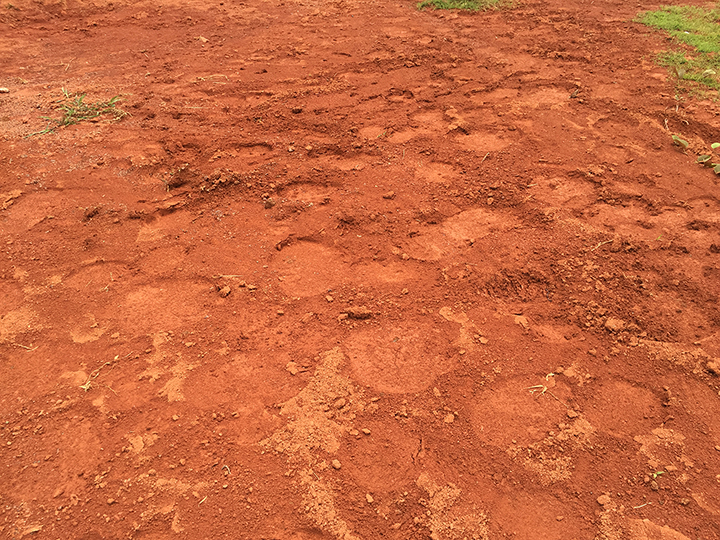
Wild elephant tracks. It's more and more difficult to actually see the elephants, but around 400 still live in the park. Some night safari guides know where to find them.
The trek took three hours, after which we drove to the visitor's center for an hour and had lunch. Three wild sambar deer roamed near the food stalls, unafraid of the people. One was even hanging around one vendor. I'm guessing some people have fed them, which is prohibited and of course leads to this sort of begging behavior.
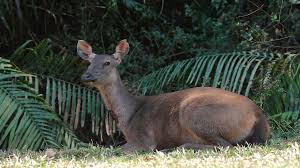
I appear to have deleted the video I took of them, but this is what the sambar deer looked like.
After lunch, we drove to Haew Suwat Falls (which was used as a backdrop in "The Beach" movie, starring Leonardo DiCaprio).
Haew Suwat Falls
Then we drove for another hour (it's a huge park), to Haew Narok ("hell hole") Falls. You have to walk in a kilometer (0.6 miles), then descend 173 steps to the falls. (I counted them on the way back up. :-) ) Some people have to stop and rest, but I'm in pretty good shape and had no problem. (I think my legs were sore the next day.)
"The top of the falls have been surrounded by an 'elephant fence' since 1993 when seven elephants were swept over the falls when trying to rescue a calf." (wikitravel.org) I saw the row of concrete pillars, but didn't know what they were for at the time. Later, a friend told me.
Stairs going down to Haew Narok ("hell hole") Falls
Haew Narok Falls
Macaque monkeys on the road (probably looking for a handout)
On July 10, after about a week in the Pak Chong/Khao Yai area, I boarded a bus to Korat, which is the informal name for Nakhon Ratchasima town. Wikipedia says Korat "is a short version of the ancient Khmer name "ankor raj." It's the main town in Nakhon Ratchasima Province and has a population of around 140,000.
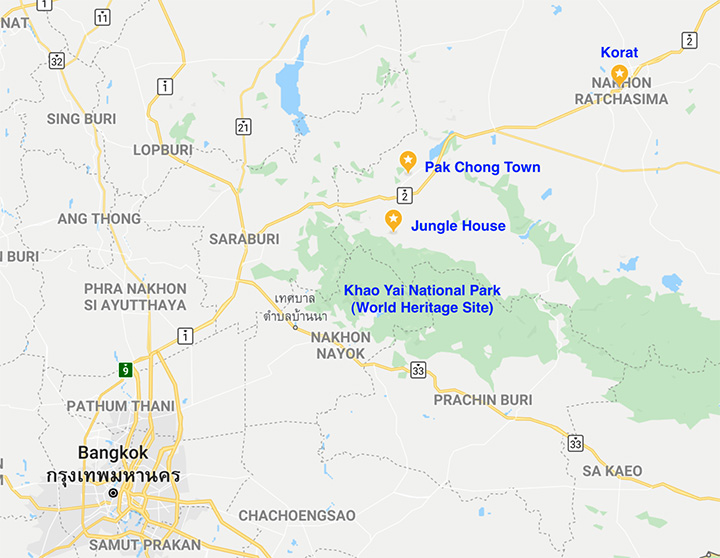
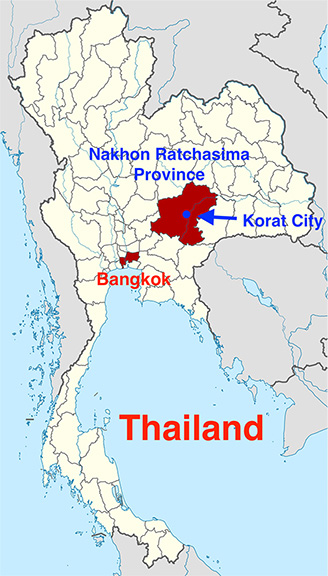
Pak Chong is about 3 hours from Bangkok. Korat is about 1 hour from Pak Chong.
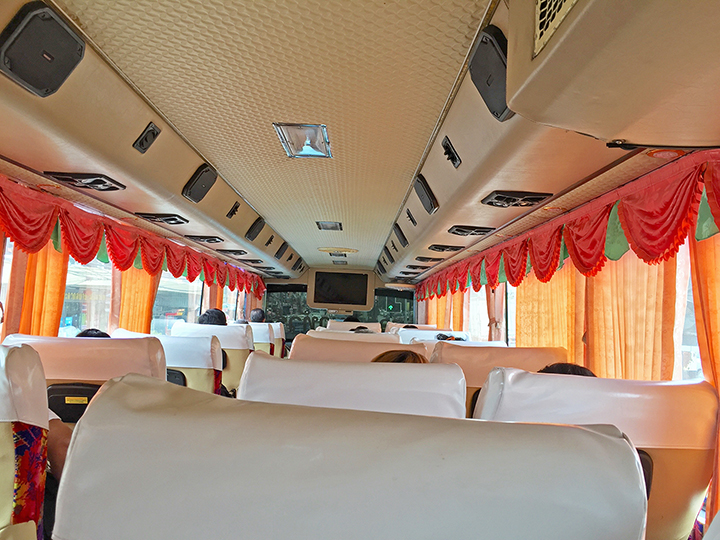
Bus from Pak Chong to Korat
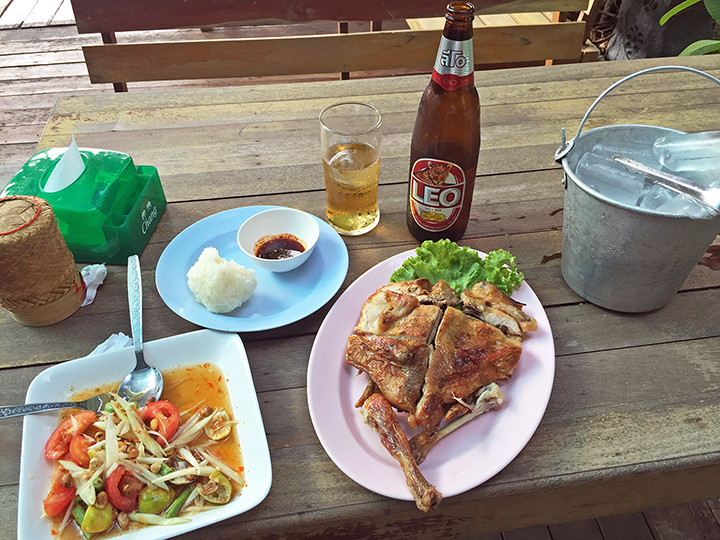
The "national meal" of Thailand: Somtam (green papaya salad), barbecued chicken, sticky rice.
Plus my favorite Thai beer: LEO (the tiger!). Thais normally put ice in beer...a custom I resisted for the first few years. Works well when drinking outside in the heat, however.
Stopped for a bowl of noodles...they had this funny boat where they made them. I thought that must be unique, but later in Chiang Mai, I saw another just like it.
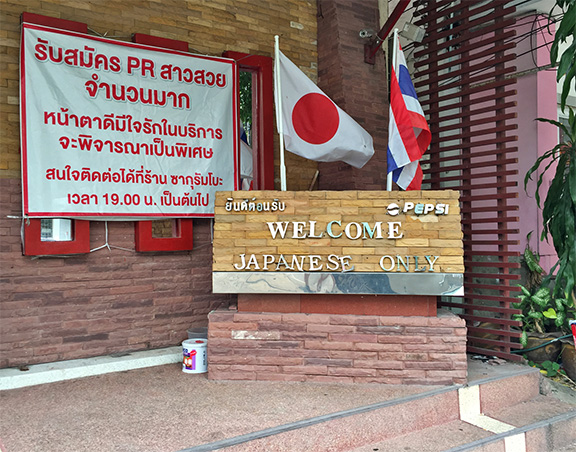
Do to the presence of some large Japanese factories in the area,
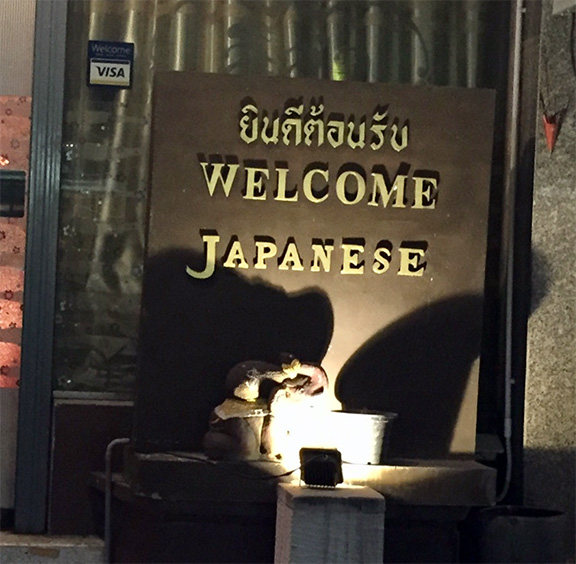
there were several "Japanese Only" clubs (i.e., bar-bordellos), in town.
An example of the xenophobia of that nationality that I saw when living in Tokyo in the 1990s.
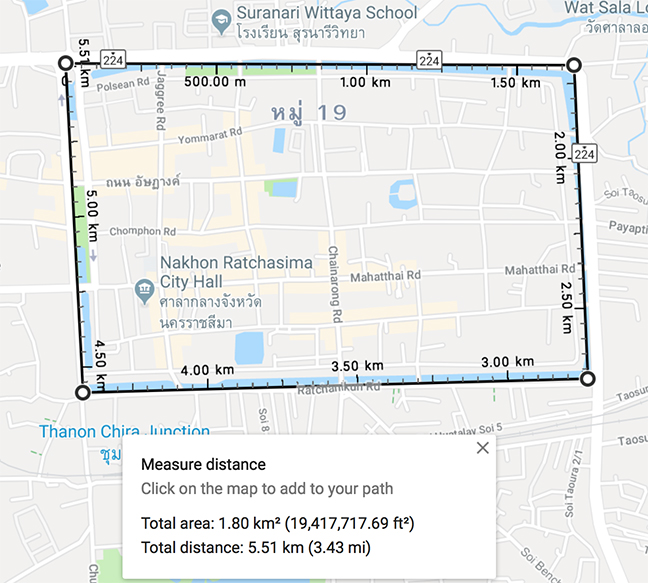
In the center of Korat town is the Old City, which is surrounded by a moat and used to have walls around it. It's rectangular, with the long sides being about 1 mile long. I was curious how it compared in size to Chiang Mai's old walled city, and discovered Google Maps has a feature where you can measure distance. (1 mile = 1.6 kilometers)
Thirteen minute movie I made after riding around Korat on July 12, 2018
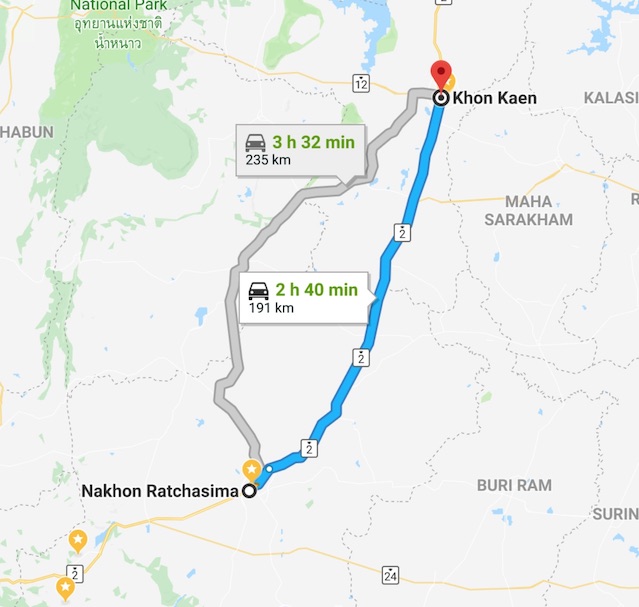
On July 13, after three nights in Korat, I boarded a bus for Khon Kaen, about 3 hours north.
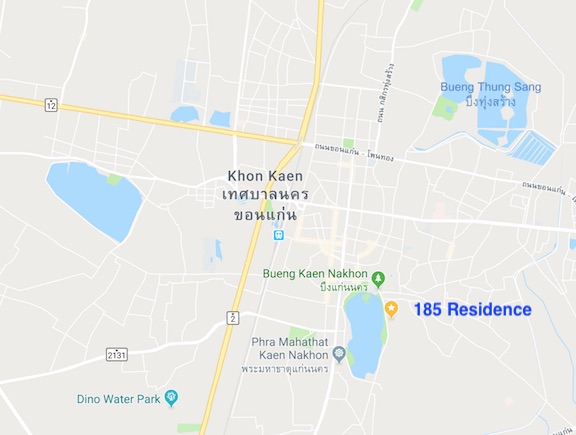
Metro Khon Kaen (pop. ~140,000). I stayed at the 185 Residence hotel,
near Lake Kaen Nakhon, one of the man-made lakes in the area.
The new Khon Kaen Bus Station No.3 lies about four miles before the actual town. Since almost everyone got off the bus there, I asked someone who confirmed that, yes, this was the bus station for Khon Kaen. It was raining slightly, so after getting my bike unfolded and front and rear bags attached, I put the custom rain cover I had made on the rear bag.
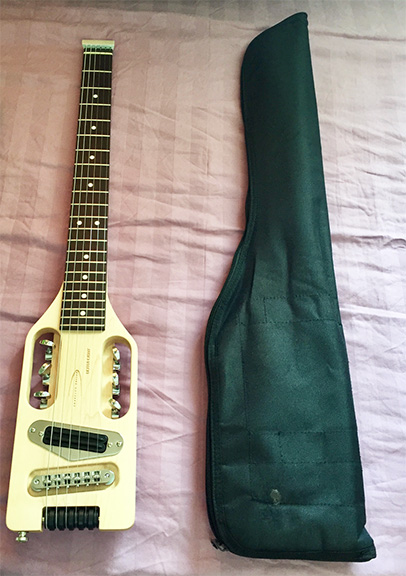
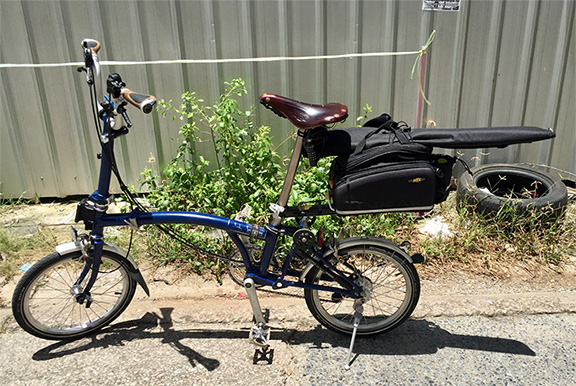
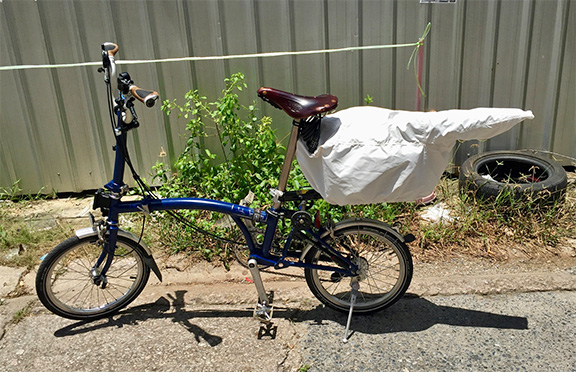
Before my trip down the coast last January, I found a seamstress near my place in Bangkok to make a rain cover for my rear bag, plus the Traveler Guitar I had strapped to the top of it. Since it rarely rains in January in Thailand, I never actually had to use it on that trip. (These photos are from September of last year.)
My room at 185 Residence and view
Riding part way around Lake Kaen Nakhon, near my hotel
A Dutchman named Jan ("Yon"), owns Yokotai restaurant in town. It's on a little strip in the more modern part of town. There are a couple other bars there that cater to Westerners ("farang"). The music was American oldies, but all were reasonable copies; not the originals. I guess this is to get around the royalties problem.
A funky kids' carnival
Rode a couple miles north to Lake Tung Sang, where they have a colorful new track around the lake.
A compilation video of a few of the temples I came across. One small one was in the Khmer style. The Chinese ones are easy to spot. One had a very odd, rustic wild animal-themed building.
Water buffalo from my hotel window. They have been employed by farmers for a log time (you can see their handler, squatting to the side). I've heard most farmers use mechanical plows and tractors now, but I'm sure some still use buffalos. According to Wikipedia, in 2011 there were 1.2 million water buffalos in Thailand, with 75% being in Isaan.
Geckos on the ceiling of Bua Luang restaurant. You often see them near outdoor lights (which attract bugs), but not this many!
After almost three weeks in Khon Kaen, on August 1st I took a night bus to Chiang Mai in north Thailand, which took about 11 hours.
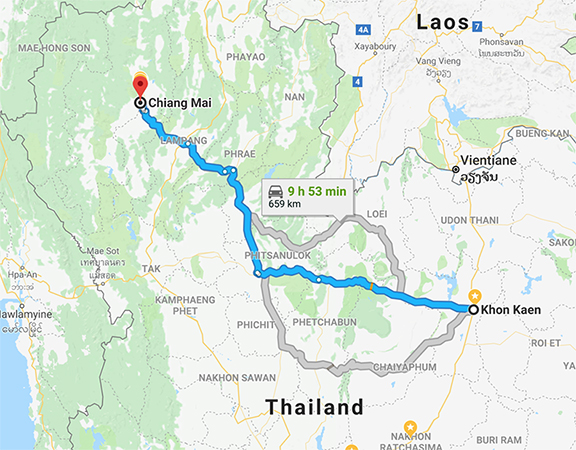
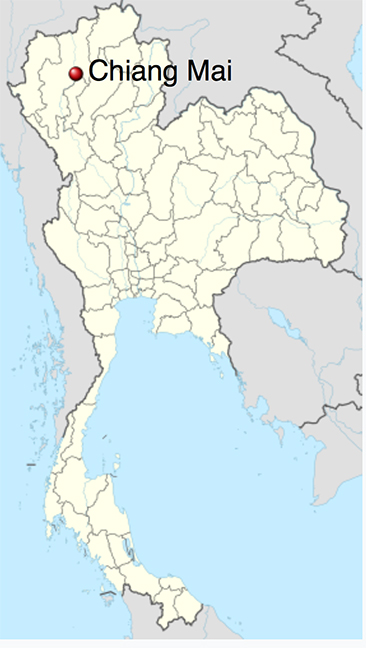
The bus stopped a few places along the way to let people off or board new riders. We arrived at Lampang, the last stop before before Chiang Mai, at around 7:00 a.m.
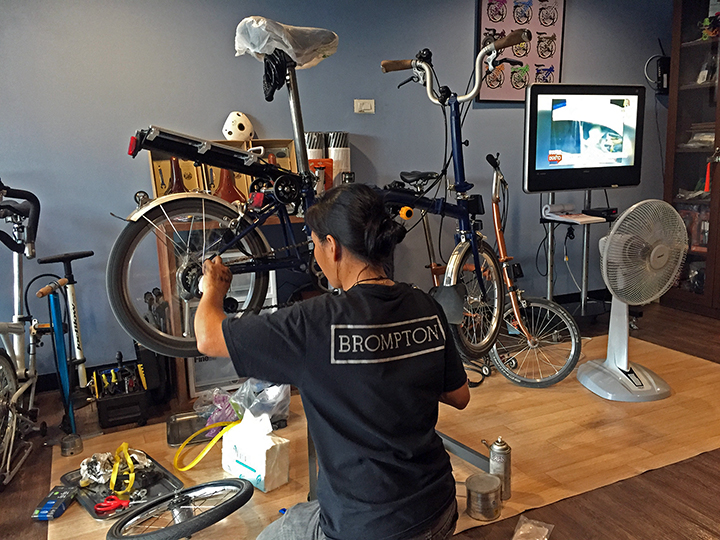
A plastic hook that helps keep my bike folded broke in the hold of the bus, so the day after arriving I pedaled over by the airport to the Tiny Wheels Brompton shop where this woman did a great job of not only installing a replacement part, but cleaned and tuned my whole bike. All for just $15.
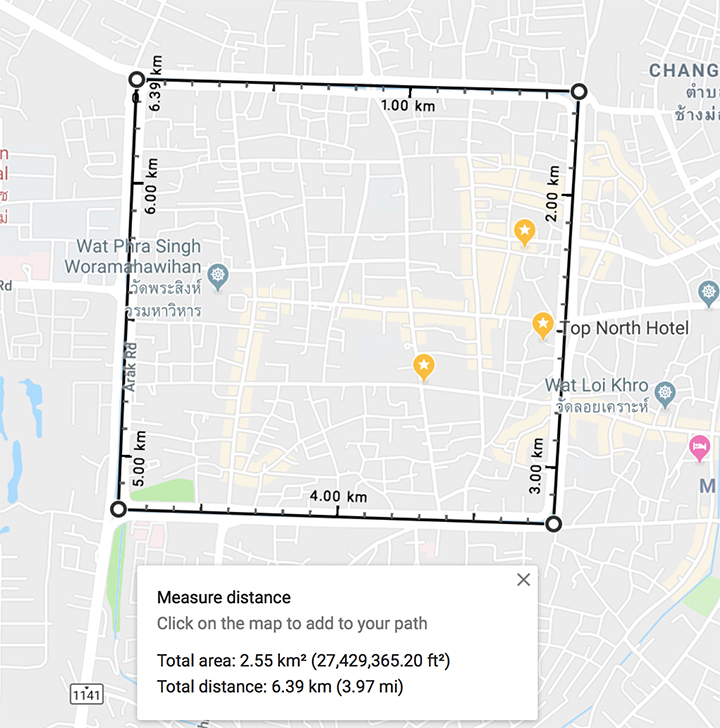
In the center of Chiang Mai is the Old City which is, surprisingly, almost a perfect square mile. So, it's a bit larger than Korat's old city.
This was my fourth time to visit Chiang Mai, but the other three times were short and I wasn't able to wander around and get a good feel for the place. Friends I know who've spent time here have the whole gamut of opinions about it. Several hate it. Some really like it. Many are in between. Most talked about how bad the traffic is on the 'ring road' around the Old City. My first impression was very negative, due to the incessant traffic by the moat.
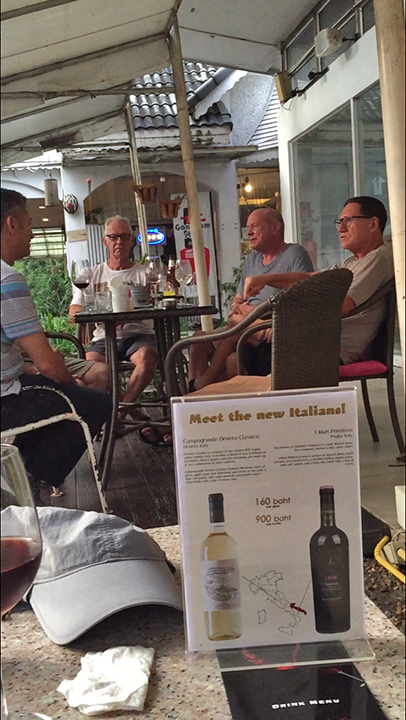
After getting my bike fixed by the airport, I looked up 'wine bars' on my Google Maps app and was surprised to find a few pop up. So, I pedaled over to one called "I Love Wine," that had decent reviews. It was in the upscale Nimman area (I never knew CM had an 'upscale' area before). They offered about three whites and three reds by the glass, but the ones I tried were only 'drinkable.' I found it interesting that at the table next to me were obviously several Jews (or of Israeli descent at least). I'd also noticed when reading the comments about another wine bar that one person said they thought the owner was anti-semitic. I have nothing against people of this ethnicity, but I did find it kind of interesting to see they had a sort of support system here.
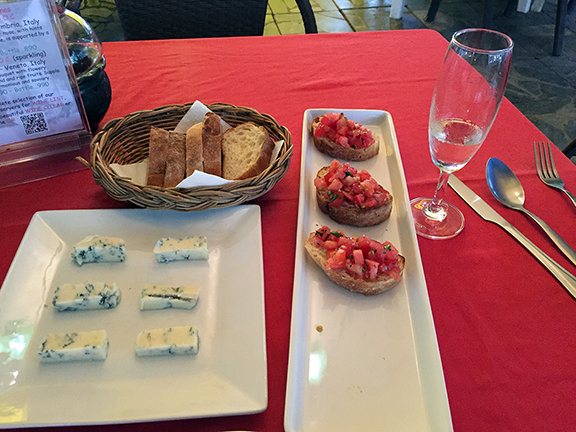
The next night I found another place on the 'wine bar' list: "Why Not?" Italian restaurant. The bruschetta, Gorgonzola and bread were great; the prosecco, okay. The owner has a decent sized, climate controlled room of expensive European bottles for those who want to splurge.
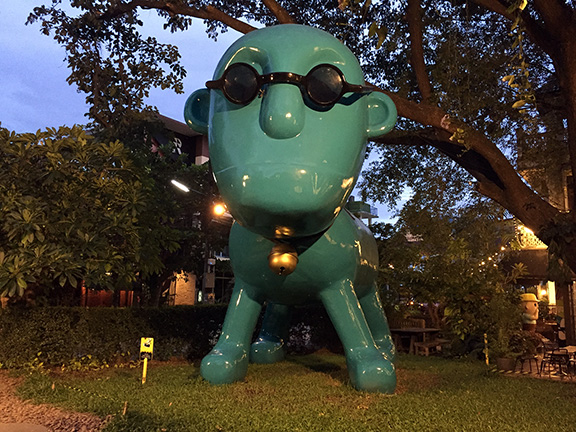
After dinner I found an iBerry ice cream shop on a side street that was packed with Chinese tourists. Many were taking selfies with this statue (the kind of thing that makes me gag). The shop also tries to trick you...they don't list the price of the 'premium' ice cream, only the 'regular' ice cream. But if you order it they inform you it's 20 baht more. I hate this sort of practice.
Still in a negative mood, I captured the crowd at the Ta Pae Gate one night, remarking how convenient it is to Starbucks, McDonalds and Burger King. A big sign says, 'Don't Feed The Animals,' yet some Thais sit right by the Gate with a large bag of cracked corn that they sell to the Chinese (and other) tourists to feed the pigeons. Which inevitably evokes the expression, "T.I.T." (This Is Thailand).
The best thing about Chiang Mai seemed to be the food options. In Bangkok there are a lot of options when it comes to food, but I'd have to travel fairly far to get to them. In CM, there are a lot of great places all within walking (or biking) distance. One of my favorites was Angel's Secrets, run by a Thai woman named Dtik, who met her husband, who she said is from Albuquerque, New Mexico, at Chulalongkorn University in Bangkok. I think she did a great job of decorating the place. (She's the one sitting at the desk in this video.)
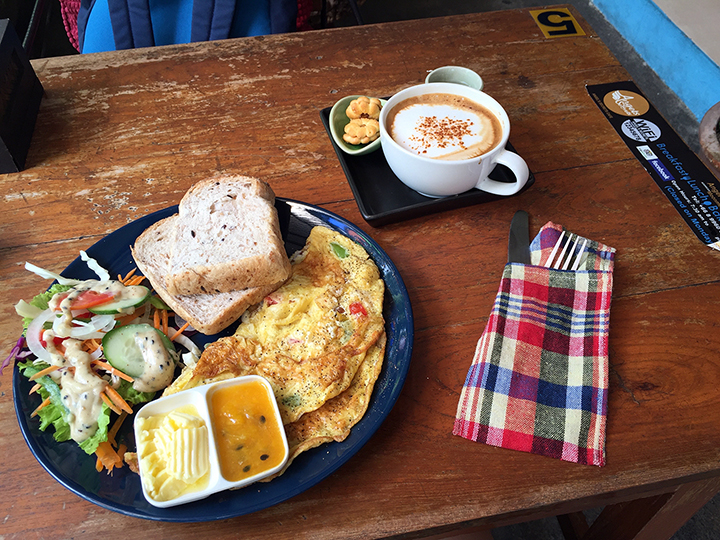
Breakfast at Angel's Secret
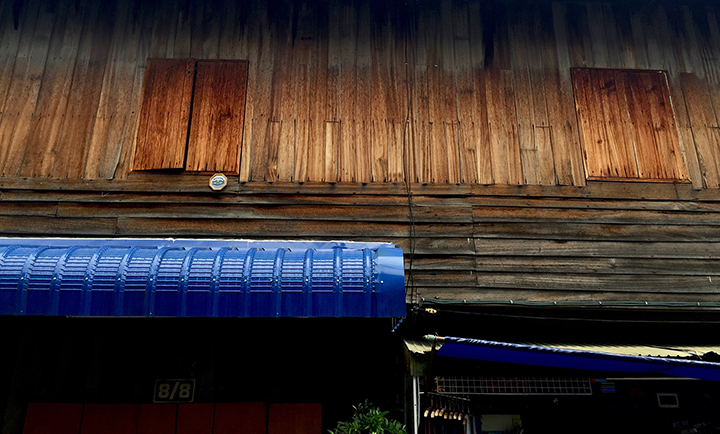
I'm a big fan of natural patina. And old teak houses.
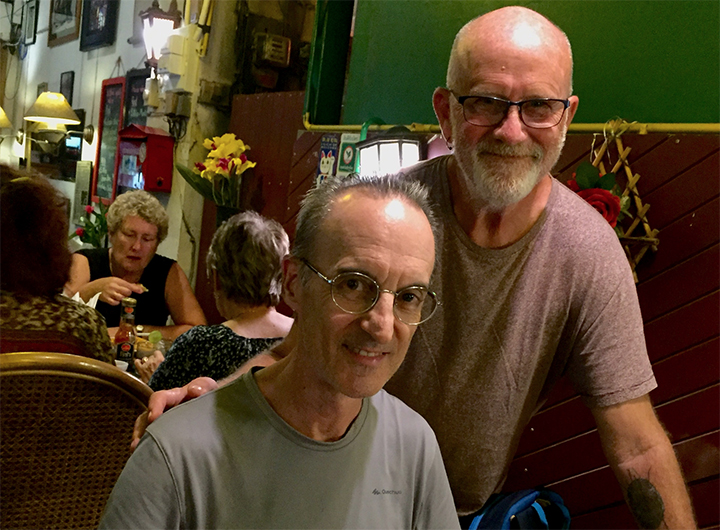
An old high school friend on Facebook saw I was in Chiang Mai and introduced me to a friend of his who moved here about four months ago. We hooked up one evening at yet another "wine bar." They had two reds and two whites available by the glass. One red and white was the common (in Thailand), Mont Clair, that is sold in boxes. I questionable whether this should be allowed to be sold as "wine," since it is made from already-pressed skins from a vineyard in South Africa, to which alcohol and grape juice has been added (or so I was told by Machiel Scholten, who was in the wine business for 35 years in Europe). I had the other white, which was just drinkable.
Another cool thing about CM is the plethora of Buddhist temples (there are around 300 in the area). One day I walked into one on a quiet backstreet and just sat down and meditated for a while. I did it again the following day, but then recalled that it is improper to enter a temple wearing shorts. So, I set off to the old Warorot Market to see if I could find some simple, cool pants that I could use for this. The first day, all I saw were the ubiquitous"'elephant pants" that many tourists wear around CM. But after asking online, someone said if I ventured to the second or third floor of Warorot, that I might find what I was looking for. So, I went back again the next day and, sure enough, found something appropriate in just a couple minutes on the second floor.
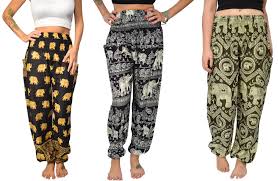
The ubiquitous 'elephant pants' worn by many tourists.
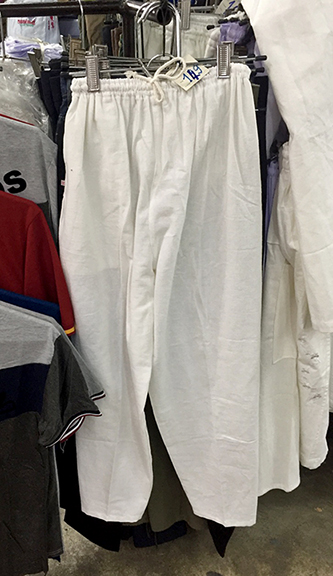
The pants I bought for meditating in temples (149 baht; around $4.50)
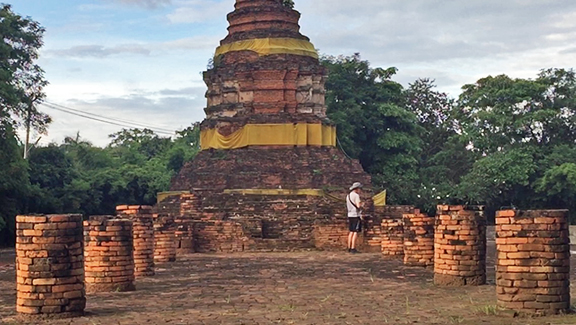
When my sister Ellen and I were here two Januaries ago, we rode a pony cart one morning through Wiang Kum Kam, which is a few minutes south of town. This area was the original location of Chiang Mai, but it was moved to the current location because of frequent flooding by the nearby Ping River. I'd remembered how peaceful the area was, so thought it might be a good place for one of my "RoadLicks" guitar lesson videos. (Click here to see that series.) So, after scouting the area one day, I got up at 5:30 the next day and rode to one of the ruins to try and catch the morning light. Unfortunately, just as I was getting set up, someone pulled up in a pickup truck and parked facing the ruin. Well, I didn't feel like entertaining them, and also thought maybe they might not like me cavorting on the sacred ruin with my little stick guitar and cowboy hat, so I packed it in. Oh well. At least I got in a 20km bike ride before 9:00 a.m.!
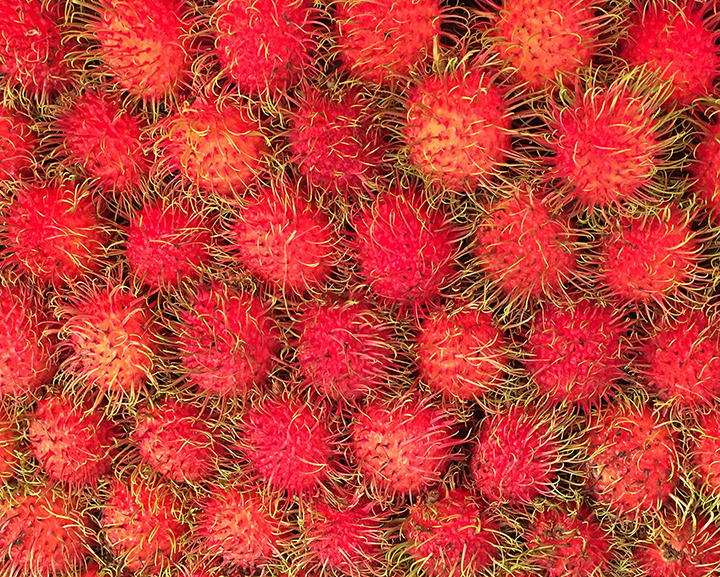
One of the shops at Warorot Market had a neat stack of rambutan. This photo shows them about actual size. The fruit inside is tasty and is a translucent white with a perfumed fragrance. Everyone raves about the quality and variety of the fruit available in CM. It may be one reason there are so many vegans and vegetarians drawn to the area, and therefore the abundance of healthy restaurants.
Chiang Mai University is on the west side of town, where the land starts to rise up Doi Suthep mountain. I pedaled around wonderfully peaceful CMU one day; then, continuing up, found the small lake of Ang Kaew Reservoir, which had a walking path part way around it. A great respite from the tumult around the Old City.
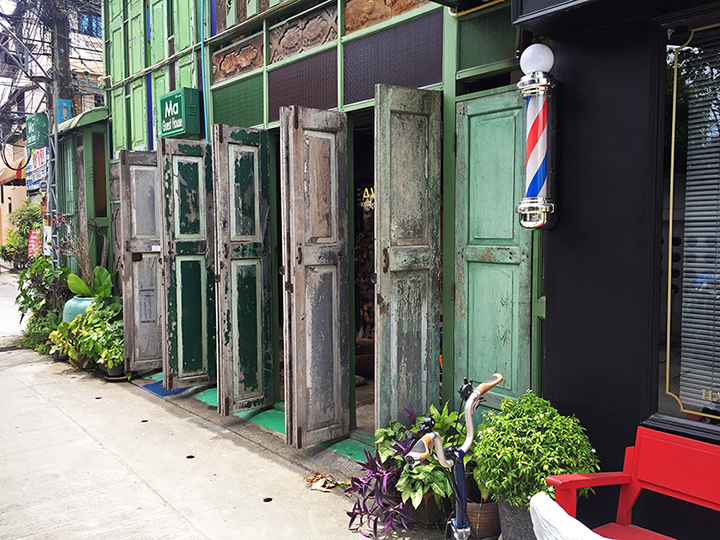
More patina
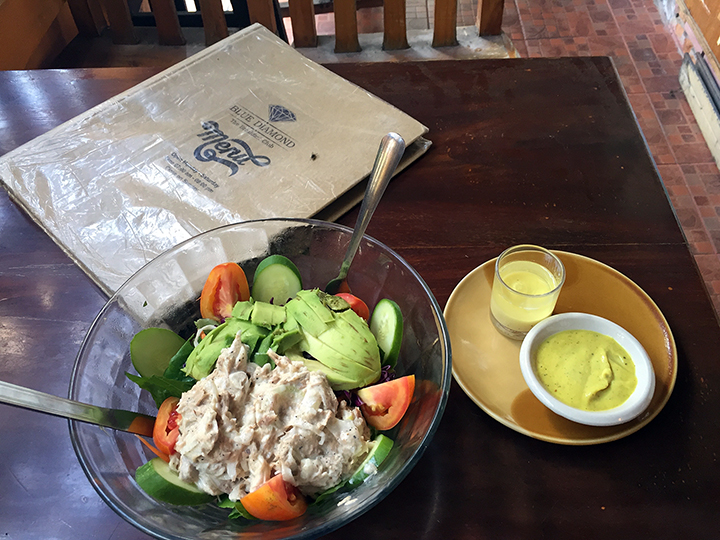
Another favorite veggie restaurant, Blue Diamond, is in the northeast corner of the Old City. Easy access to fresh, tasty, healthy, reasonably priced food is a huge deal for me. I'm more than willing to eat mostly vegetarian food, if I have easy access to good quality stuff. Where I live in Bangkok, unfortunately, I often just go for what's available in the neighborhood, a lot of which is not very healthy. I felt healthier after just a few days in CM, due to all the fresh, tasty, (mostly) veggie food.